Selling a Rental With a Tenant in It: What Oregon Agents Should Know
What to know before you list a house with a Tenant in it.
You can list a rental with a tenant in it in Oregon. Whether it can be empty by closing depends on three things: who is buying it, what kind of lease the tenant has, and how long they've lived there.
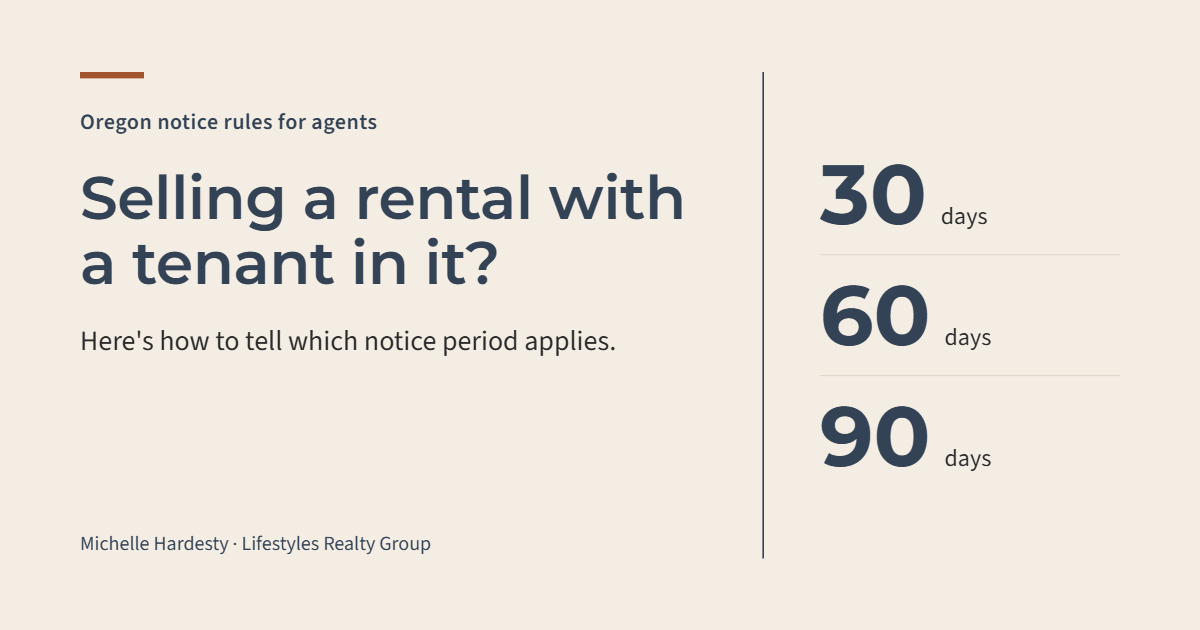
The timing is what catches people. Once a tenant is past their first year, the notice can't go out until there's an accepted offer, and it runs 60 or 90 days. That has to fit inside your closing date.
Here's how it works.
Three ways it can go
- The buyer is an investor and the tenant stays. The lease goes with the house, and the buyer closes on a property that's already earning rent. No notice to end the tenancy is involved.
- The buyer will live there. The tenant has to move out before closing, and Oregon's notice rules decide how much time they get. That's the table below.
- The tenant moves out on their own. A tenant can give notice and leave. If an owner and tenant want to agree on a move-out date in writing, have an attorney look at that agreement first.
The first one is often the simplest sale, and it's the one people forget is an option.
The notice rules when the buyer will live there
It starts with how long the tenant has lived in the house. The first year counts from move-in.
- Month-to-month, first year: at least 30 days' written notice. No reason has to be stated.
- Fixed-term lease ending within the first year: at least 30 days' written notice before the lease ends. No reason has to be stated.
- Fixed-term lease, still in the term: the tenancy can't be ended for a sale during the term. Sell with the tenant in place, or time the sale to the lease end.
- Past the first year, standard option: at least 90 days' written notice, after an accepted offer from a buyer who will live there, with written evidence of the offer attached. Owners with more than four units also pay one month's rent.
- Past the first year, 60-day option (SB 586): at least 60 days' written notice, with the same accepted offer and evidence, plus one month's rent paid to the tenant when the notice is given.
The 60-day option took effect September 26, 2025. It trades a month of rent for a month of time, which can be what makes a closing date work.
Getting the notice wrong is expensive. Under ORS 90.427, the tenant can recover three months' rent plus damages, and can use it as a defense to an eviction. Different rules apply when the owner lives on the same property, and Portland has its own. Anything specific to a tenancy is a question for an attorney.
Showing a house with a tenant in it
Under ORS 90.322, the tenant gets at least 24 hours' actual notice before a showing, and showings happen at reasonable times. The owner and tenant can agree on a different arrangement for showings to buyers.
In practice, the tenant's cooperation does more for the listing than any rule. Talk to them early, give them the showing schedule, and say thank you. A tenant who knows what's happening keeps the house ready.
When we manage the home, we handle the tenant side: the notices, the showing schedule, and keeping the tenant in the loop.
When the buyer is an investor
If your buyer plans to keep the tenant, or rent the house out after closing, they'll want a rent number before they write the offer.
Send me the address and I'll tell you what it should rent for. That's usually the number they're missing. I'm also happy to meet you and your client at the house and walk through it together.
After closing, I manage the house. Your client stays your client.
Michelle Hardesty
Property Manager/Principal Broker
Lifestyles Realty Group
541-408-3620
michelle@lifestylesgroupre.com
Sources
- Enrolled SB 586 (2025), amending ORS 90.427
- SB 586 overview, Oregon State Legislature
- ORS 90.322, landlord access